
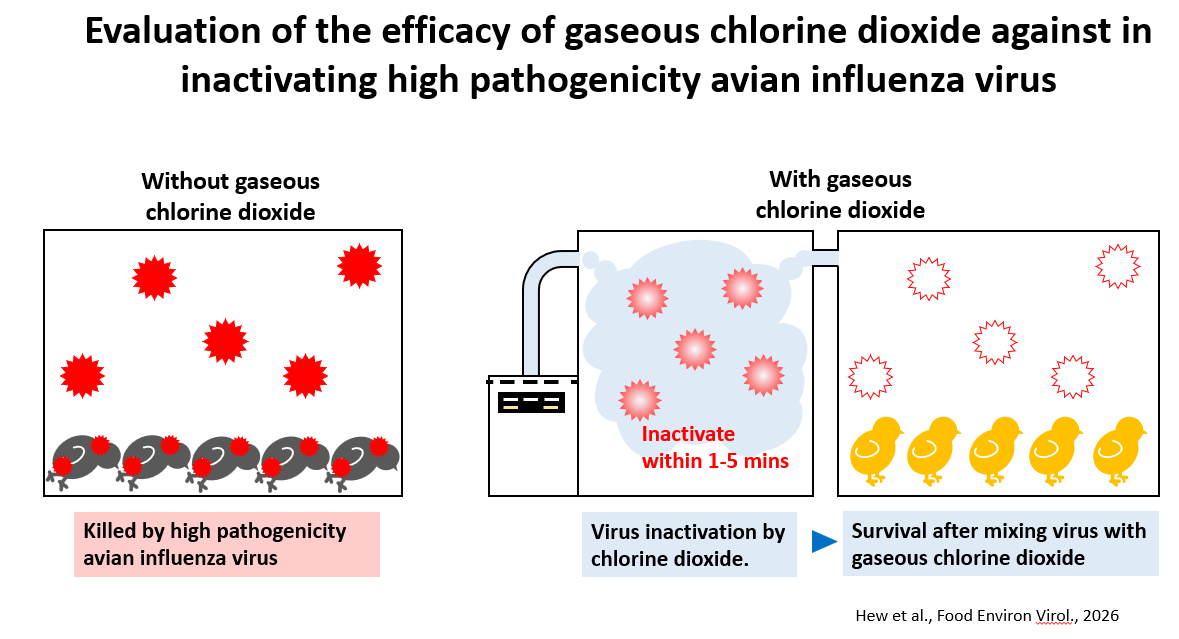
A research group led by Professor Yoshihiro Sakoda (Graduate School of Veterinary Medicine) and his research group evaluated the efficacy of chlorine dioxide gas in inactivating high pathogenicity avian influenza viruses (HPAIV). Low-concentration gaseous chlorine dioxide is widely recognized for its disinfectant properties.
Point:
- Chlorine dioxide gas is known to exhibit disinfecting activity even at concentrations considered safe for humans and animals.
- Exposure to chlorine dioxide gas at a safe concentration for a short period reduced the titer of HPAIVs by approximately 100-fold.
- This study is the first to demonstrate the virus-inactivating effect of chlorine dioxide gas in chickens, highlighting its potential application as a biosecurity measure for infection control on poultry farms.
This study demonstrates the potential of chlorine dioxide gas as a novel approach for controlling HPAIV. Given its relatively high level of safety compared with other gaseous disinfectants, chlorine dioxide gas may serve as a practical and effective biosecurity tool for preventing infectious diseases in livestock production environments, particularly poultry farms.
For more information, please click here or visit the page below.